
Eight hours in bed. Still woke up tired?
It might not be you. A closed bedroom fills with the carbon dioxide you breathe out, and by the early hours it can reach several times the level outside. You will never notice it happening.
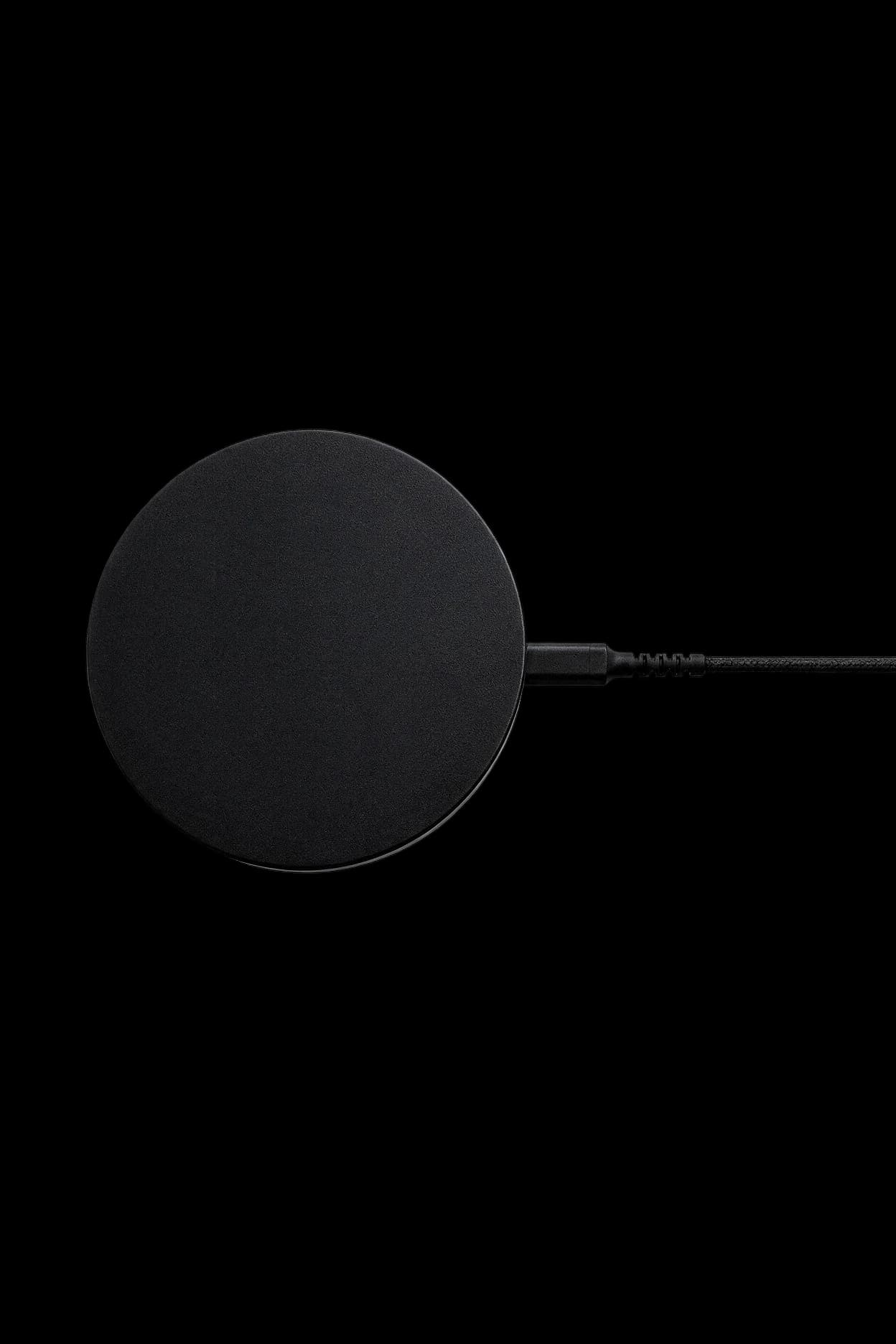
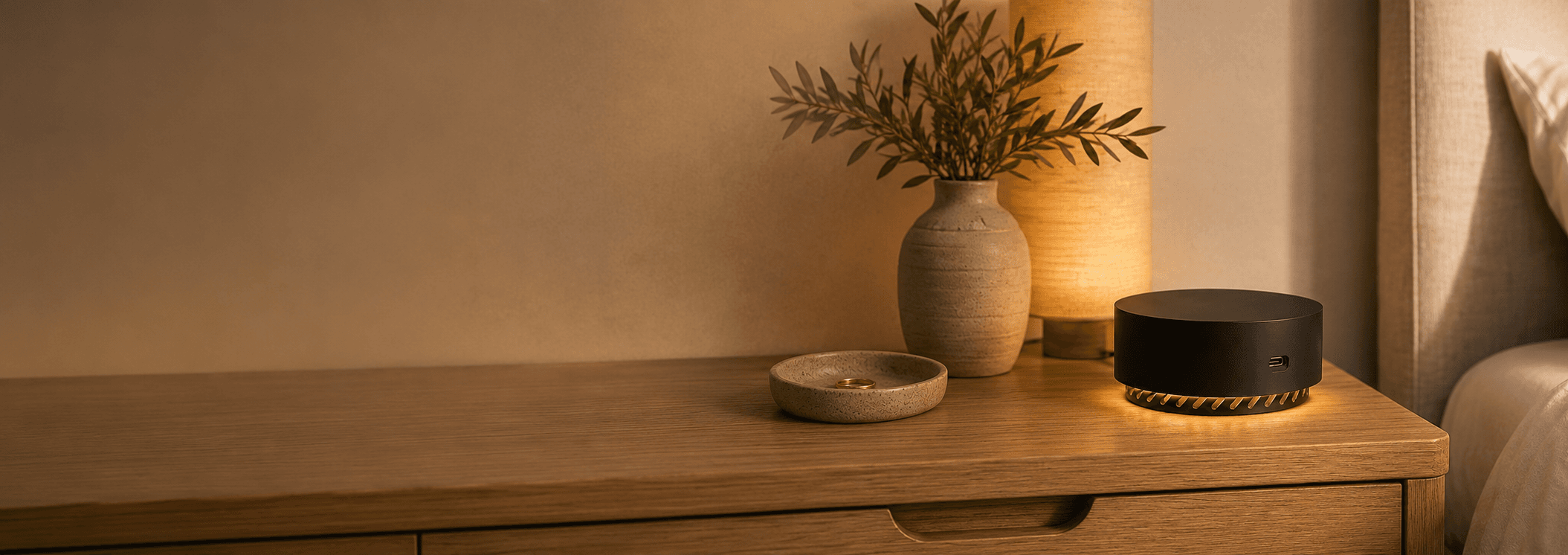
Dormio is a bedside sensor that watches your room, not your body, and shows you what changed on the nights you slept badly.
Find out what your bedroom is doing to your sleep.
Beta units go out in the next couple of months. Join the waitlist and we will tell you first. Price to be confirmed soon, and no commitment to buy anything.
What Dormio measures
Five things about your bedroom, every night, without anything touching you.
Carbon dioxide
The air you cannot notice
A closed bedroom fills with the CO2 you breathe out, and by the early hours it can reach several times the level outside. You will not smell it or wake because of it. You will notice a thick head in the morning.
Dormio measures it all night, so you can see whether a shut door is what turns a good night into a poor one. The fix is often a window left open a crack.
Presence and movement
It knows you are there, not what you look like
Low-power radar senses that somebody is in the bed, and how much they are moving. That is the difference between a room that was warm and a room that was warm while you were in it.
Nothing has to be worn to bed. There is no camera anywhere in Dormio: radar returns movement, not images.
Temperature and humidity
Your body has to cool down to fall asleep
Your core temperature drops as you fall asleep, and a warm room gets in the way of that. Humidity decides how well that drop happens, which is why the same temperature feels different in dry air and in damp air.
Seeing both together tells you whether to change the thermostat, the bedding or the ventilation, rather than guessing at all three.
Sound
The noise you sleep through still costs you
Traffic, a dog, a partner, a fridge cycling on. Noise does not have to wake you to pull you out of deep sleep, which is why it is so easy to miss.
Dormio measures how loud the room got and when, so a recurring 3am disturbance becomes something you can point at. We are working on picking out snoring, which would mean short recorded clips. Those would be yours, and seen by a clinician only if you send them.
Light
Your body clock is still reading the room
Light is the strongest signal your body clock has, and it keeps reading it after you close your eyes. A streetlight through thin curtains, a standby LED, a phone at 2am: each one says daytime.
Measuring it through the night shows whether your room actually gets dark, and whether it gets light again sooner than you would like.
What Dormio doesn't do
Just as important as what it does.
No camera
Presence and movement are sensed with radar, not video. There is no image of you anywhere, and nothing to watch.
No wearable
Nothing to strap on or remember at bedtime. It sits on your nightstand and stays plugged in, so it is always measuring.
No anxiety-inducing score
No arbitrary 'sleep score' to obsess over. Just clear, actionable environmental data you can control.
Questions people ask
Worth knowing before you put your name down.
Does it need to touch me, or go on the bed?+
No. It sits on your nightstand and stays plugged into a USB-C cable, so it is measuring all night without you thinking about it. There is nothing to wear and nothing under the mattress. It does need to stay plugged in, which is what lets it measure the whole night without you thinking about it.
Is there a camera or a microphone?+
No camera, anywhere, ever. Movement is sensed with low-power radar, which returns motion rather than images. There is a microphone, and today it measures sound as a level: how loud the room got and when, with no audio kept. We are working on picking out snoring, which would mean recording short clips. If we ship that, those recordings are yours. They stay in your account for you to listen to, and a clinician sees them only if you choose to send them.
Does it work if I share a bed?+
The environmental readings measure the room, so they hold for both of you. Presence and movement sensing is aimed at one side of the bed, and this is one of the things we most want beta feedback on.
Do I need wifi?+
Yes, for readings to reach your phone and build up a history. The device keeps measuring if the connection drops and catches up when it returns.
Can I use it if I rent, or move often?+
Yes. It is a plug-in device on a bedside table. Nothing is mounted, drilled or wired in, and it takes a minute to set up somewhere new.
Do I need a Khaya account?+
Not for the waitlist. You will need one to see your readings when the device arrives, because that is where your history lives, and it is free.
How much will it cost?+
Price to be confirmed soon. Joining the waitlist commits you to nothing, and we will tell the list before anybody else.
Is there a subscription?+
No. The device and the app that comes with it are yours.